
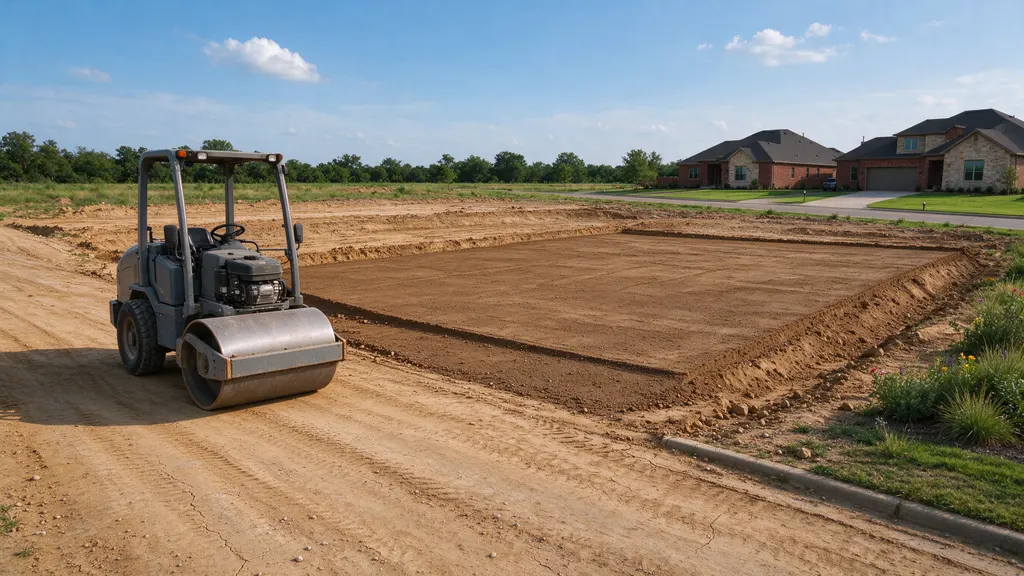
Check the work area, not just the project name
Celina's Engineering Services guidance states that an earthwork permit is required for earth-disturbing activities. Its examples include excavation, embankments, and moving, depositing or stockpiling soil and rock. The City also identifies an additional floodplain-development permit for projects located within a designated floodplain, alongside the earthwork permit.
That makes the physical work area important. A proposal described as a small pad can still involve deliveries and temporary piles elsewhere on the parcel. Show those areas when discussing approvals. We do not assume a property is outside a regulated area because the intended building is on higher ground or because a neighboring owner completed a similar project.
Establish the intended use before ordering loads
The first material decision is what the ground will support. Building pad preparation needs the specified support conditions for the planned construction. A landscape fill area may have a different purpose and acceptance standard. A contractor cannot turn those into the same scope simply because both involve spreading soil.
Bring the grading design and any geotechnical recommendations that are available. They help define what can be reused and what must be imported. If the project is still conceptual, we can discuss what earthwork information is missing without inventing a finished elevation or a material specification. Our soil tests and grading plans guide explains the separate roles of those documents.
For fill placement, the target elevation matters as much as the delivery quantity. Too much material creates a disposal problem or an unplanned grade change. Too little can leave the intended support area unfinished. Start from the designed result, then calculate the relevant quantity and explain how delivery and placement will be measured.
Floodplain questions come before a reuse decision
Where the property is within a designated floodplain, the City's additional review needs to be part of the planning. Do not assume that retaining surplus soil onsite is automatically acceptable. The responsible designer and reviewing authority need to address the proposed change before it becomes an instruction to spread material.
For the earthwork scope, we need a confirmed destination for every major material movement. That could be an approved reuse area, a temporary stockpile or export. The guide to cut-and-fill balance explains why matching excavation and fill quantities is not enough by itself. The material must be suitable and the destination must fit the project design.
If the design changes after pricing, identify the effect on both cut and fill. A raised pad can reduce one excavation while increasing imported material somewhere else. We want the revised instruction documented before work expands. That protects the owner from comparing the original price with a different finished project.
Have plans?
Let’s define the earthwork.
Treat stockpiles as planned temporary construction
A stockpile can occupy the space needed for trucks, equipment or a later trade. Before leaving excavated material onsite, identify its footprint and the route around it. Keep any planned drainage path and required controls in the discussion. An empty corner of the lot is not automatically the best place to store material.
Decide how long the material is expected to remain and who manages the area while it waits. If soil will be removed later, the quote should say whether reloading is included. Direct loading and later rehandling are different work sequences. Our dirt removal service can be scoped around the actual loading arrangement rather than an assumed open entrance and unlimited working room.
Erosion and stormwater planning matters during this temporary stage as well as at completion. The project documents should assign the relevant controls and upkeep. We do not promise that a pile will remain unaffected by weather or that a generic barrier detail is suitable for every property.
Plan the route from the entrance to the cut
Photograph the entrance, turns and final approach. A property can have plenty of space at the work area but a constrained route from the road. Loaded trucks and excavation equipment have different movement and support needs, so identify where each is expected to travel. Existing surfaces and buried infrastructure may affect that plan.
Our equipment access measurements guide helps organize the information to send. Include overhead restrictions and any route that depends on another owner's permission. We do not create access by clearing trees, brush or stumps. Land clearing is excluded; where it is required, another provider must complete that work before the agreed earthwork handoff.
If the proposed work extends into public right-of-way, Celina lists a separate ROW permit process. That boundary should be resolved with the project applicant. A permit for one part of the development should not be assumed to authorize every activity at the entrance or along the street.
Match the excavation to the contractor who follows
For foundation excavation, share the new-foundation layout and cut details. For pool excavation, provide the pool builder's requirements and the soil-handling plan. For driveway excavation, define the subgrade condition below the surfacing that follows. These endpoints produce different work even when their areas are similar.
Commercial earthwork should include the civil drawing revision and specification notes. Where backfill and compaction must meet a test program, establish who arranges and accepts that testing. We offer and manage excavation services with fulfillment by licensed and insured contractors; engineering design, utility installation and foundation repair are outside the excavation offering.
Put the budget against a defined scope
There is no useful universal Celina price for moving dirt. The depth, material suitability, haul distance, access and acceptance criteria determine the proposal. A quote that leaves soil onsite cannot be compared directly with one that includes export. Likewise, spreading imported fill does not necessarily include the specified preparation and testing beneath a building.
Use our excavation cost and volume estimator to organize dimensions and then compare excavation quotes with consistent inclusions. A calculation of in-place volume is not automatically a truck count. Ask the bidder to state the measurement basis and the treatment of changed quantities.
Send the property address, proposed use and available documents to start. Mention whether earthwork or floodplain review is already underway, and identify the next contractor's requirements. We can then discuss the actual excavation package rather than pricing an unspecified number of loads and leaving the finished result open to interpretation.
Questions before the work.
Can I stockpile imported soil in Celina before the main project begins?
Celina includes depositing and stockpiling earth materials in its earthwork-permit guidance. Confirm the proposed storage activity and location with Engineering before deliveries. The main project's future start date does not settle that question.
Does every Celina property need a floodplain-development permit?
No blanket assumption should be made. Celina identifies that additional permit for projects in a designated floodplain. Establish whether it applies to the actual work area through the City's review process.
Is there a standard per-load excavation price for Celina?
No supported local per-load rate covers all these services. A load price needs a stated material, volume basis, transport distance and handling scope. Excavation, import, export and compaction should be priced against the project's actual requirements.
Can a larger property guarantee room to keep the excavated soil?
No. Available space is only one factor. Reuse needs a suitable material, an approved destination and a grading result that fits the project. A large unused area does not establish permission to raise its elevation.
Will you clear the entrance before the equipment arrives?
No. Tree, brush and stump removal are outside our scope. We plan excavation access along an available route; any required land-clearing work needs to be handled separately before our earthwork begins.