
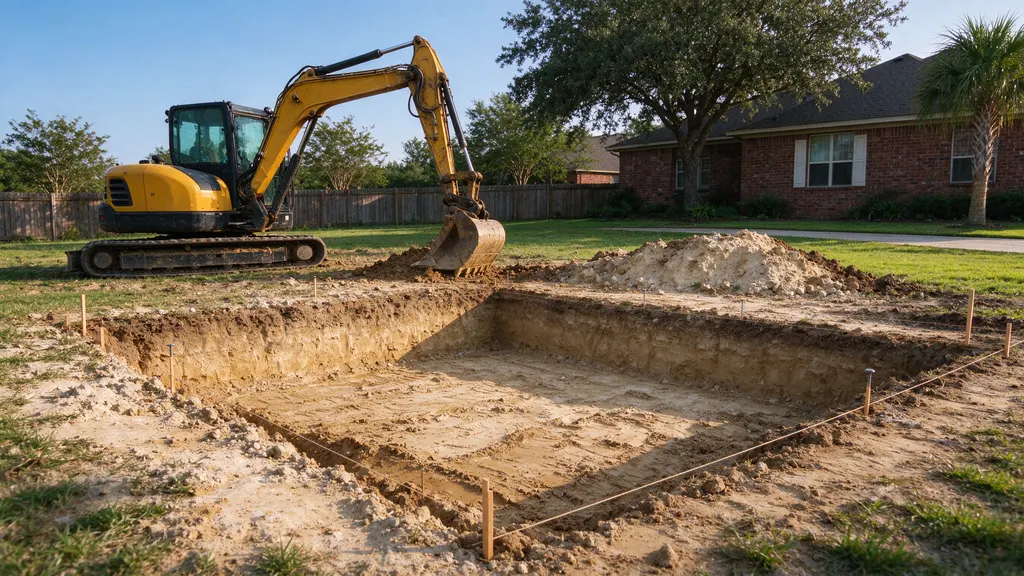
Residential excavation
Earthwork around a home, addition or planned improvement.
Explore residential excavation ↗RESIDENTIAL + COMMERCIAL / FRISCO, TEXAS
The plans call for a pad, a trench or a new pool. Getting there means more than digging a hole. We handle residential and commercial excavation, with the cut, soil movement and next trade's requirements defined before work starts. Tell us what you are building and what is already in the ground.
Get an Estimate ↗THE PROJECT COMES FIRST
Building an addition? We can excavate the foundation footprint to supplied plans and define where the soil will go. Preparing a commercial site? Bring the civil drawings and earthwork specifications so the scope follows the design. Adding a pool? We handle the excavation portion, working to your pool builder's layout.
If the job is mainly changing elevations, start with grading. If the issue is reaching a backyard through a narrow route, tight-access excavation needs its own equipment and hauling plan. A short distance on a drawing can still involve a long trip between the bucket and the truck.
WHAT WE DO
Earthwork around a home, addition or planned improvement.
Explore residential excavation ↗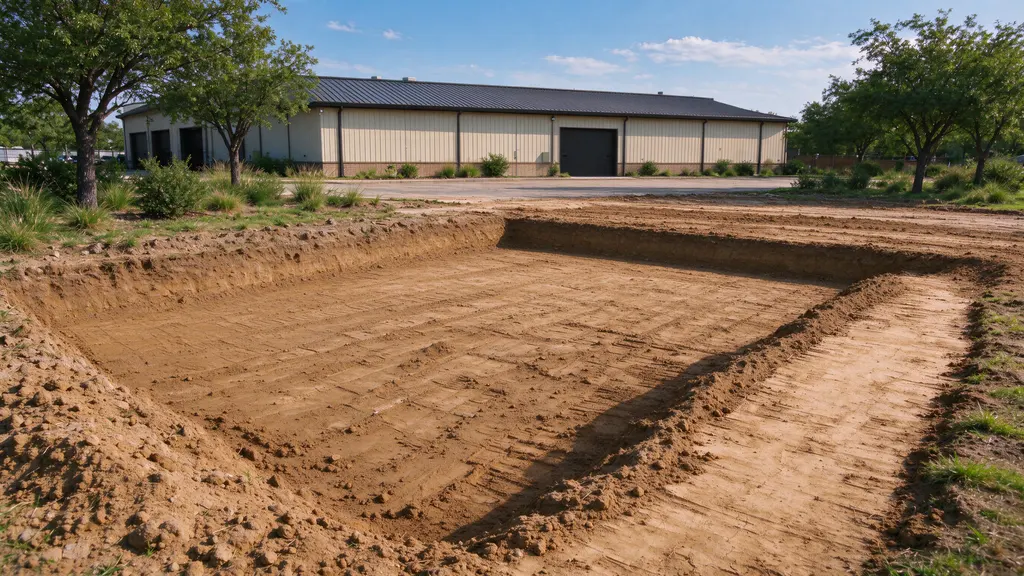
Earthwork tied to civil drawings and project specifications.
Explore commercial excavation ↗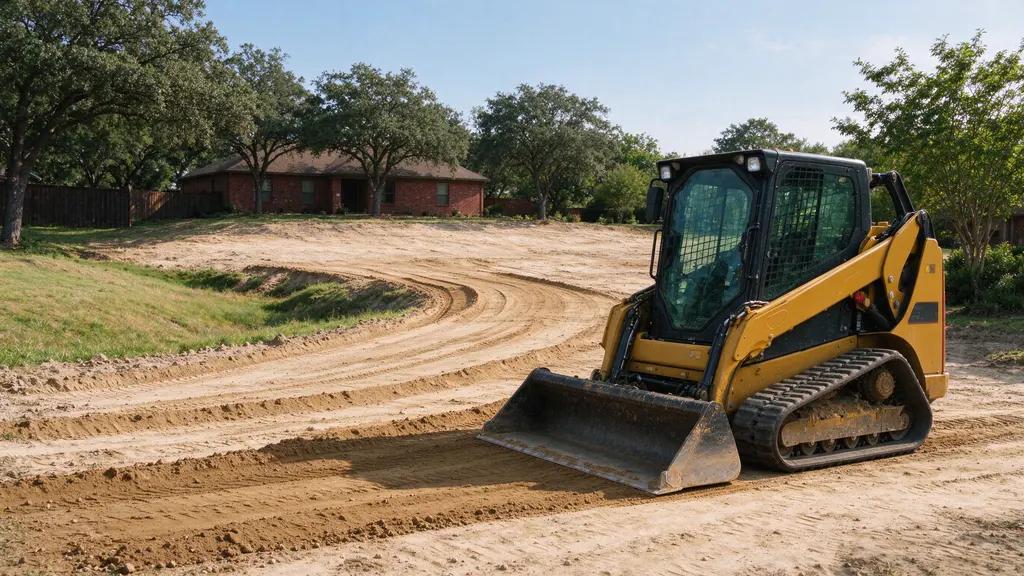
The cut and fill needed to establish the intended ground shape.
Explore grading ↗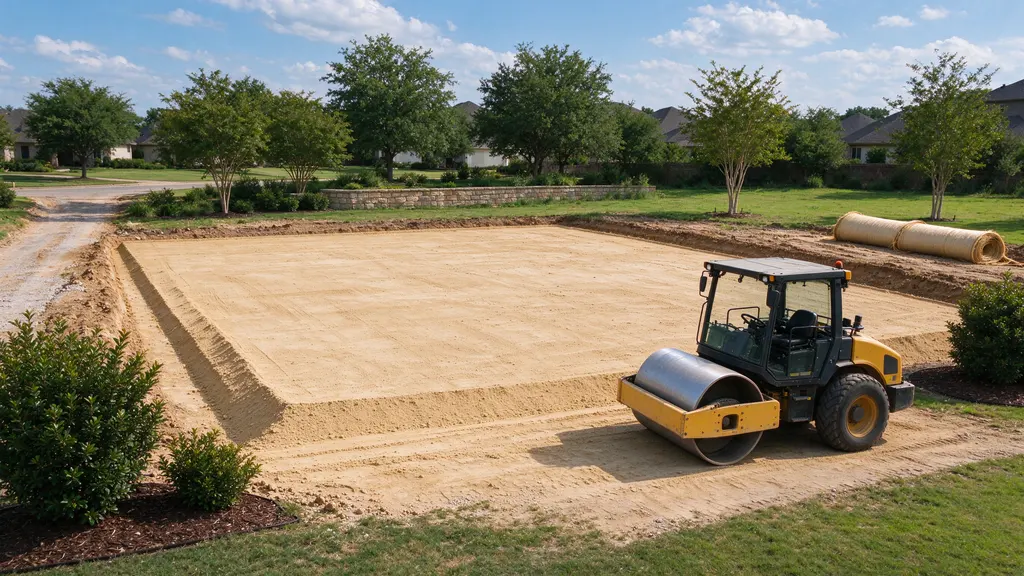
Suitable material, specified compaction and a defined handoff.
Explore building pad preparation ↗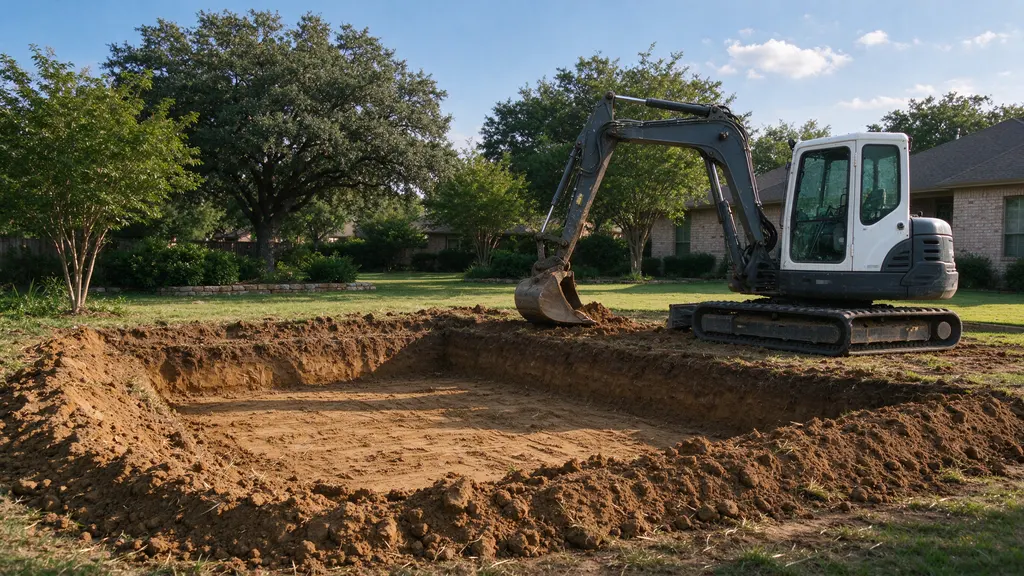
Foundation and footing cuts to supplied plans.
Explore foundation excavation ↗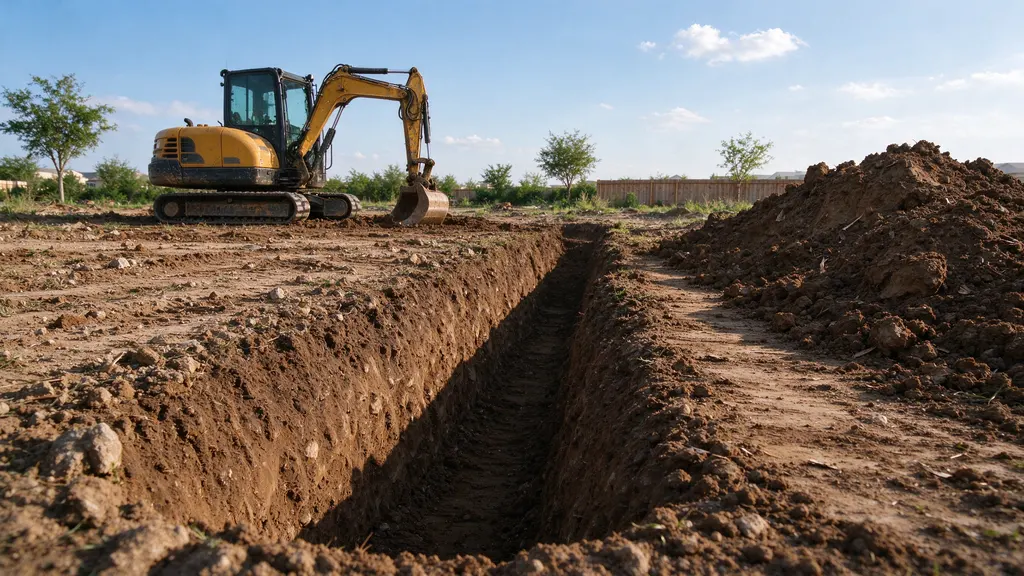
The excavation route for another trade’s installation.
Explore trenching ↗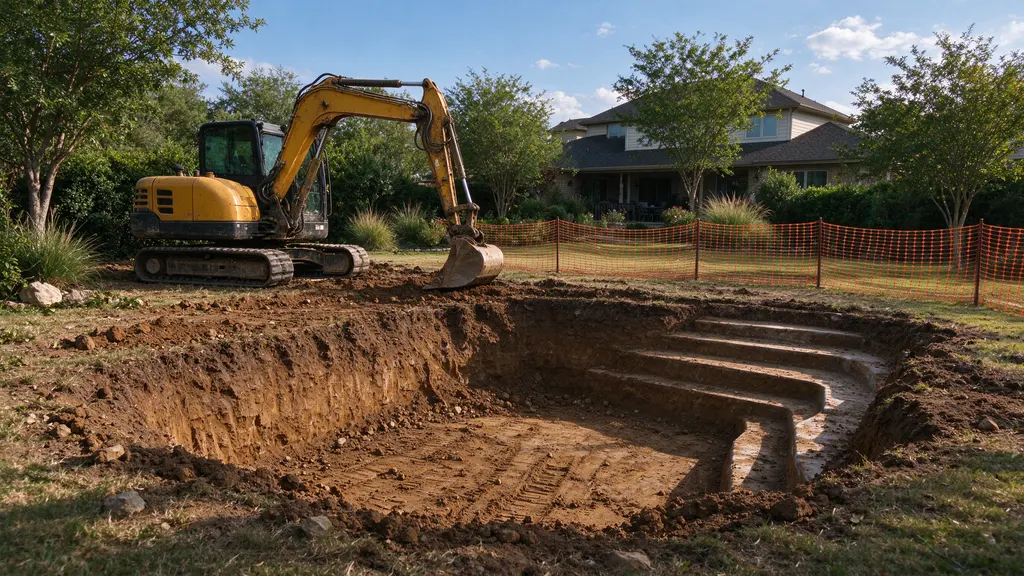
The dig and soil handling to your pool builder’s layout.
Explore pool excavation ↗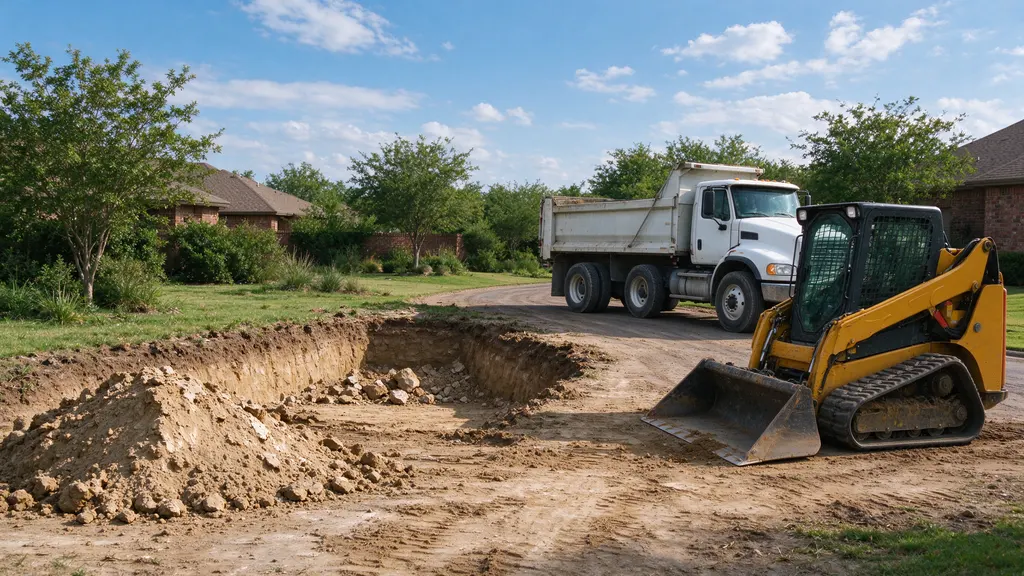
Loading and hauling material that cannot stay onsite.
Explore dirt removal ↗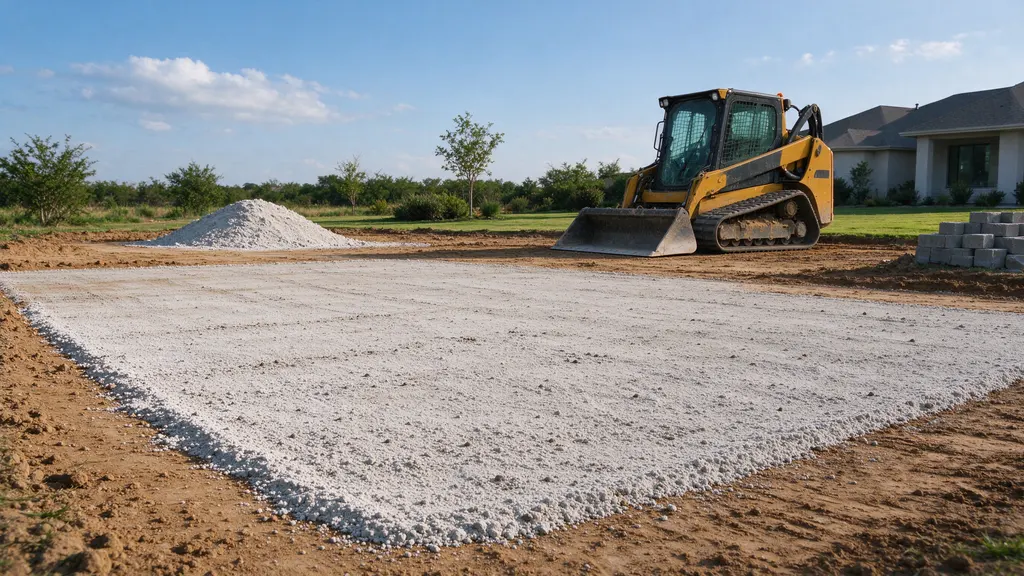
Suitable material placed for its intended use.
Explore fill placement ↗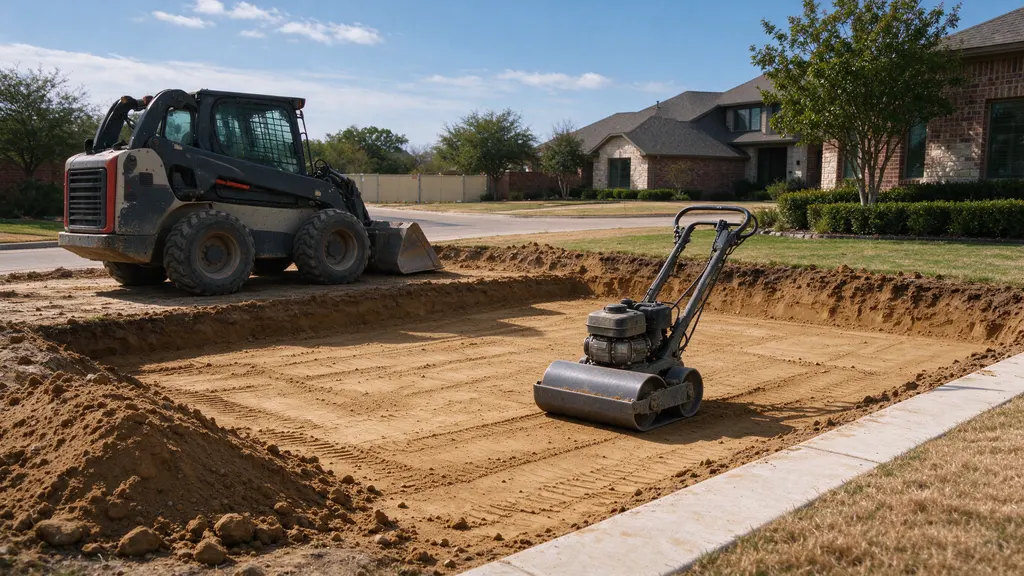
Rebuilding excavated areas to the project requirements.
Explore backfill and compaction ↗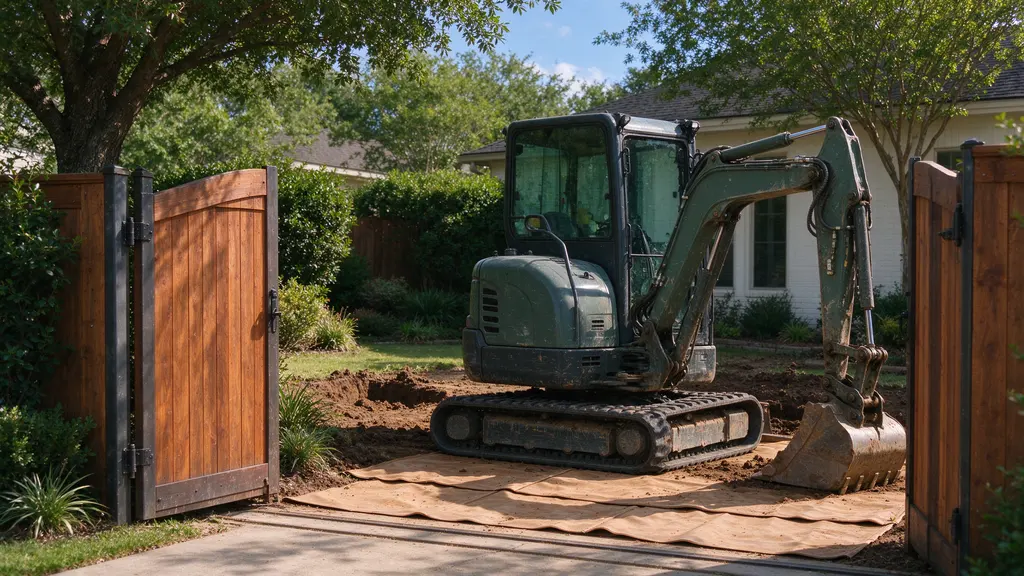
Equipment and material movement through restricted routes.
Explore tight-access excavation ↗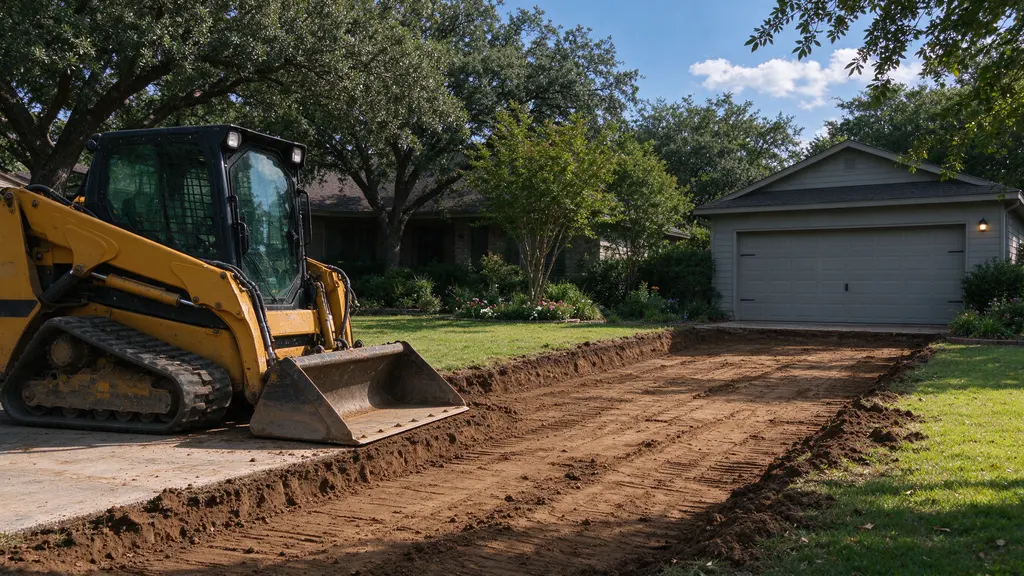
Excavation and subgrade preparation before surfacing.
Explore driveway excavation ↗Land clearing, demolition, utility installation, pool construction and foundation repair are outside our scope.
SCOPE BEFORE SCHEDULING
A foundation contractor needs the right excavation, not just a large opening. A pool builder needs the layout followed. A paving contractor needs an agreed subgrade. We want those requirements in the scope before equipment arrives.
That means deciding who supplies the layout, who authorizes changes and who accepts the finished earthwork. Where testing is specified, the quote should identify who arranges it and how a failed result is handled. These are practical handoffs, not paperwork for its own sake.
SCOPE BEFORE SCHEDULING
Keeping soil onsite can reduce hauling, but only when there is a permitted, useful place for it. Material suitable for a landscape area is not automatically suitable beneath a building pad. The design and soil requirements decide what can be reused.
Exporting soil needs loading space and a truck route. Bringing fill in adds delivery and placement to the job. We separate those decisions so a low excavation figure does not conceal the work needed to leave the site ready.
BUDGET & SCOPE
DALLAS-AREA BUDGET CONTEXT
Broad residential project range. Depth, access and soil handling determine the actual scope.
FRISCO / PLANO PROJECT EXAMPLE
Excavation for an 800-square-foot slab addition. Soil preparation and compaction are separate.
DALLAS-AREA BUDGET CONTEXT
Loading and removing excavated soil. Confirm the volume basis, destination and disposal conditions.
These describe different project scopes, not items to add together. They are planning figures, not company rates. See what changes an excavation price.
A price makes sense
when the scope is clear.
| Decision | When it fits | What must be resolved |
|---|---|---|
| Keep suitable soil onsite | An approved use and enough room exist. | Material suitability and the final grades. |
| Load and export | Surplus or unsuitable material must leave. | Loading access, destination and volume basis. |
| Import specified fill | The design requires material that is not available onsite. | Fill specification, delivery and compaction. |
LET’S TALK ABOUT THE WORK
Send the address, project description and any plans you already have. Access photos help us understand the route to the work.
FROM FIRST CALL TO HANDOFF
Send the property address, a short description and any plans you already have. Photos of the access route help explain a job that is hard to describe over the phone. Include a picture looking toward the work area and another showing where trucks could load.
The proposed sequence is a scope discussion, site review, written earthwork scope, excavation and the agreed handoff. Before scheduling, responsibilities for permits, utility locating, layout and testing need to be clear. No need to guess the machine size before contacting us.
SERVICE AREA
We serve Frisco, Prosper, Little Elm, The Colony, McKinney, Celina and Allen. The municipality matters because approval and inspection requirements follow the property, not the name on a contractor's truck.
Tell us the actual job address even if the mailing city differs from the authority reviewing the work. Our location guides explain the questions to resolve before a cut, fill delivery or trench becomes a scheduling problem.
At Frisco Excavation Works, we define the intended result before choosing the earthmoving method. Site excavation is the work of removing and moving ground to create the space or shape a project requires. Earthmoving can also include placing suitable material in another part of the site. Those descriptions cover connected operations, but a useful scope names the actual result: a foundation cut, a prepared pad, an agreed grade or a route for another trade's work. We want that result defined before choosing how to reach it.
The starting condition matters just as much. Tell us whether the work area is accessible, which existing features will remain and what another contractor must finish first. A site that still needs clearing or demolition is not the same starting point as an open prepared area. Our site preparation guide explains how earthwork fits into the larger sequence while keeping those excluded activities separate.
The most useful first message includes the property location, the intended construction and the plans available now. Add photographs of both the work area and the approach. If a gate, turn or surface may restrict equipment, show the full route rather than only the opening. Access measurements help us understand the problem, while a site review establishes whether the proposed method fits the actual conditions.
Identify the next trade and the requirements they have supplied. For an addition, that may be the foundation contractor's layout and excavation level. For a pool, it is the pool builder's current design information. For a driveway, it is the required subgrade condition before surfacing. If those requirements are not yet available, say so. We would rather keep an open decision visible than hide it inside a broad allowance.
An excavation creates a material handling question immediately: where will the removed ground go? Keeping it onsite needs space and an intended use. Exporting it needs a loading arrangement and a defined destination scope. Importing fill adds material selection, delivery and placement. Our cut and fill guide brings these decisions together so that the digging price is not mistaken for the whole earthwork operation.
Quantities also need a label. Soil measured in place is not the same measurement as loose soil after digging or compacted material after placement. The volume measurement guide explains the distinction without assuming a universal conversion. When you receive a proposal, ask what quantity basis it uses and which activities are attached to that number. This makes comparisons more useful than checking the lowest figure alone.
Plans describe intended work; the ground can reveal information that was not available during the first discussion. The scope should explain how an unexpected obstacle or a requested change is documented, reviewed and authorized. That process gives the owner a chance to understand the effect on the work before an additional operation becomes an assumed commitment.
The quote comparison guide helps you look for those terms alongside exclusions and completion requirements. Ask who can authorize a change and how the field team will receive it. A revised drawing should have a clear reference, and an instruction that affects soil handling or access should be reflected in the working plan. Clear communication is part of keeping the operation aligned with what you purchased.
Completion should describe the condition delivered, not simply the departure of the machine. Record what area is finished, what material remains and whether any testing or receiving-trade review is still outstanding under the project requirements. Where later backfill or final grading requires another visit, identify that separately so the next construction stage does not erase the boundary between completed and future work.
Use the project readiness assessment to collect open items before requesting an excavation scope. We handle approved residential and commercial earthwork through licensed and insured contractors, with the work matched to the project requirements. Send the information you have and identify what is still being developed. That gives us a practical starting point for discussing access, material movement and the finished condition your project needs.
Yes. Our scope includes both residential and commercial excavation. The proposed work, access and plans determine the equipment and preparation needed.
Yes. Trenching is an excavation service. Pipe, cable and other utility installation remain with the responsible trade, with the trench requirements agreed before digging.
No. Land clearing and related brush, tree, stump and grubbing work are outside our service scope.
Possibly. There must be a suitable, approved use and a place to put it. We need to account for its condition and the intended final elevations.
Send what you have. We can discuss the scope from an early description, but work requiring a designed layout or specified elevations needs that information before construction.
No. Our offering is the excavation portion. The pool builder remains responsible for the pool design and construction scope.
You can begin the planning discussion with the information available, provided unfinished decisions are clearly identified. A firm scope needs the requirements that control the cut, grades, material preparation and handoff, so later design changes may require a revised proposal.
Yes. Show how equipment and material deliveries would reach the property, as well as the gate or work area. The complete route helps explain turning space, loading arrangements and surfaces that may need review.
Identify the areas being excavated, the proposed fill areas and their intended uses. Include any supplied material and preparation requirements. Keep import, placement, compaction and export questions visible instead of assuming they are all covered by the word excavation.
Name the receiving trade, the required finished condition and the person who confirms readiness. Record any remaining material, later return work and outstanding review so everyone understands which operation is complete and which comes next.
USEFUL BEFORE YOU CALL
Tell us what you’re building.
We’ll start with the dirt work.