
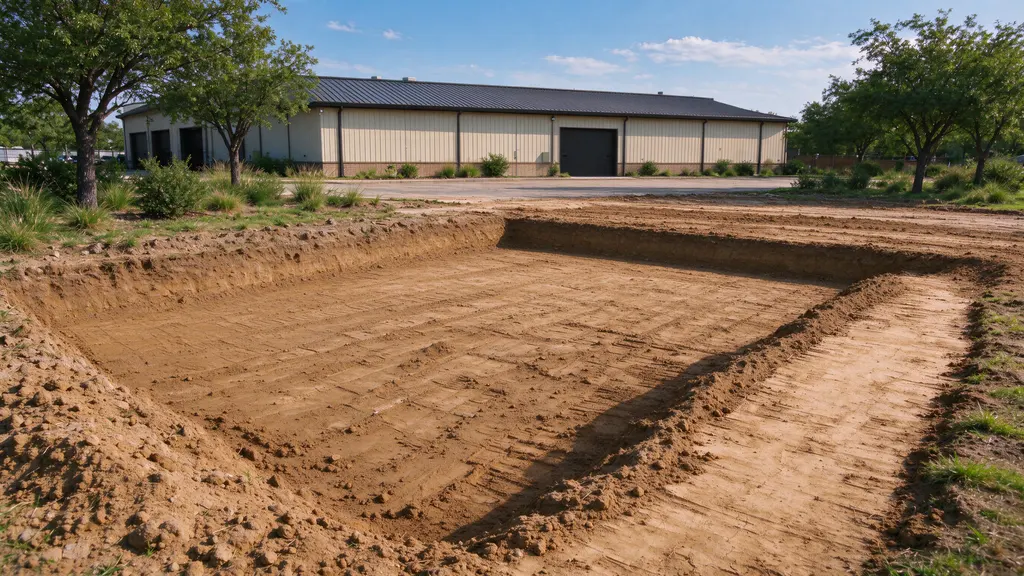
Put the current documents at the center of the bid
Commercial drawings often change while pricing is underway. Identify the drawing date, revision and addenda that should govern the excavation proposal. Include the grading plan, relevant sections, geotechnical information and any written earthwork requirements. A site plan showing the building outline does not necessarily establish the excavation depths, material treatment or acceptance criteria. Our commercial bid document guide explains the information that makes an earthwork comparison useful.
We also need the boundaries of our package. Separate excavation from utility installation, concrete placement, paving, landscaping and other trades. If another contractor prepares the entrance or removes an existing structure, show that dependency in the schedule. Site preparation must be defined for an already accessible work area; we do not offer clearing, tree work or demolition. The proposal should identify assumptions instead of leaving the superintendent to discover competing interpretations after mobilization.
Review cut, fill and movement together
A commercial earthwork plan may require material to move several times unless storage and sequencing are considered early. We review the intended cut areas, fill areas and temporary stockpile locations together. That helps identify whether soil can move directly to its receiving area or must wait for another phase. Cut and fill planning separates a balanced drawing from a workable sequence on the ground.
A volume balance does not prove that all excavated material is suitable for every fill location. Structural areas may have specific material and placement requirements. Where the design requires imported material, fill placement needs a defined source specification and receiving area. Where material must leave, dirt removal needs truck access and an agreed disposal scope. The bank and loose volume distinction matters when comparing survey quantities, truck quantities and the finished compacted fill. We do not treat those measurements as interchangeable.
Make room for the whole operation
The excavation area is only one part of the site. We need space to reach it, load material and move around the work without blocking the next operation. A narrow staging area can change the equipment or sequence even when the overall property is large. Tell us whether neighboring businesses remain open, delivery routes must be preserved or another contractor controls the shared entrance.
We review equipment access alongside the proposed working limits. A truck route needs more than a line from the street to the excavation; turns, overhead obstructions, ground condition and the loading position all matter. The equipment access guide helps organize the dimensions we need. If the work must be divided into phases, identify which areas must be released first and which areas remain available for stockpiles. Repeated moves and return mobilizations should be visible in the pricing and schedule.
Have plans?
Let’s define the earthwork.
Separate bulk earthwork from unconfirmed specialty scope
We review commercial excavation against the actual project scale and requirements. A commercial label alone does not establish that a job is a suitable mass excavation package. Large civil quantities, deep excavations or specialized water management need a specific capability review before they can be included. We do not advertise a universal machine fleet or promise capacity from a rendering of the finished development.
Pond excavation, dredging and detention construction are not standalone services we offer. If plans show a basin, explain its relationship to the proposed earthwork so the package boundary is clear; do not assume that general excavation includes the complete facility. New foundation excavation can be scoped separately to supplied foundation details. Building pad preparation addresses the receiving surface and specified fill process. Those distinctions keep an earthwork proposal from being mistaken for turnkey site development.
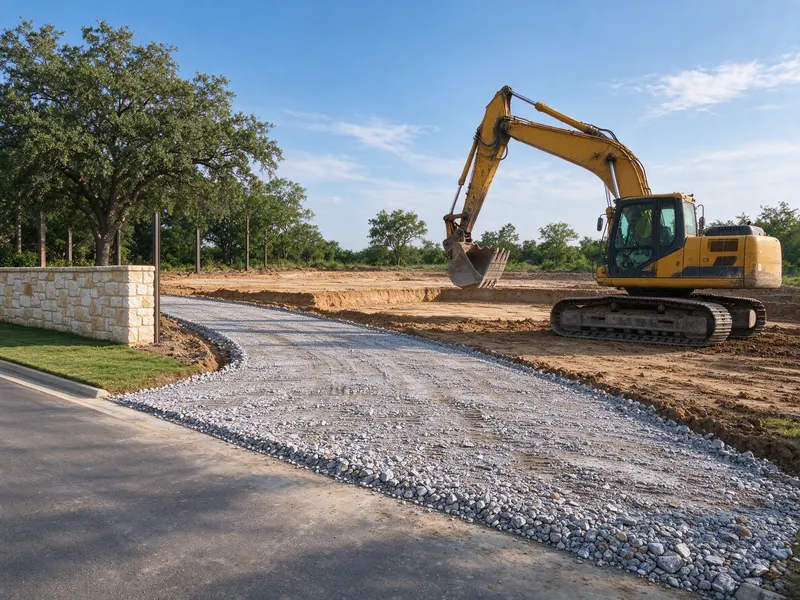
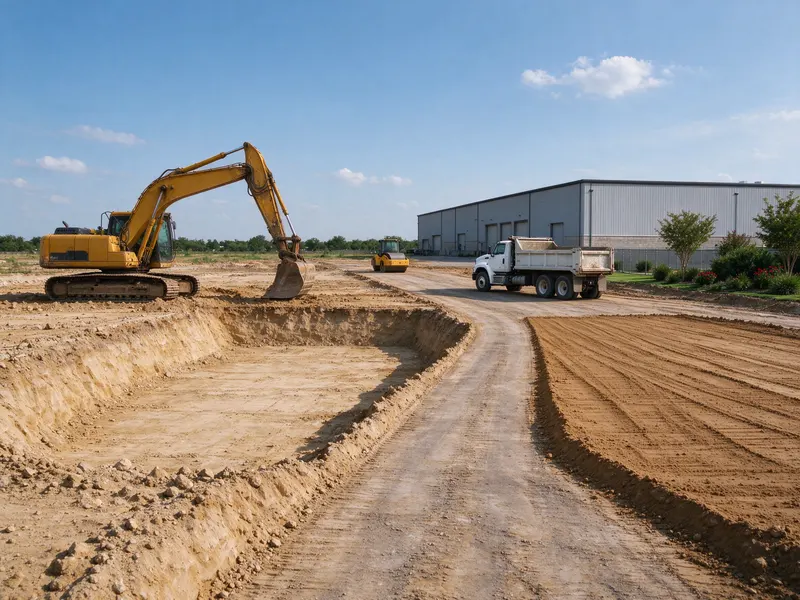
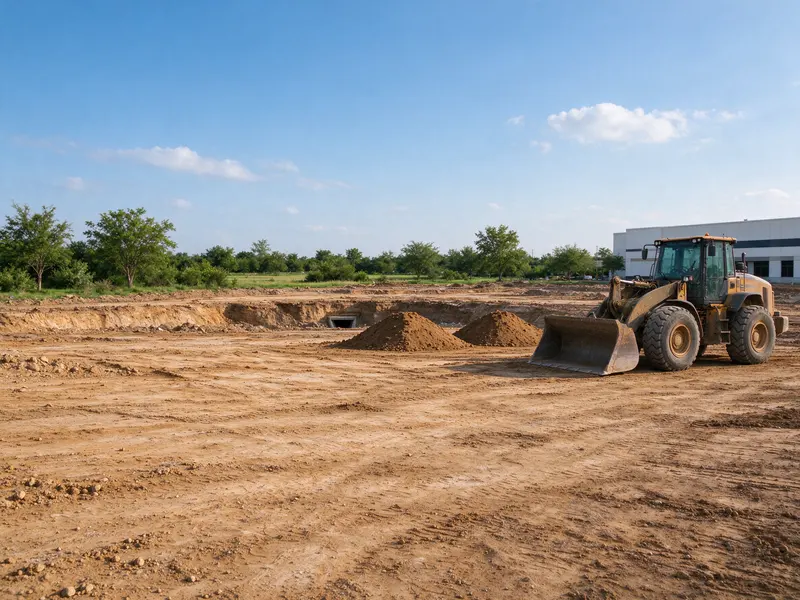
What this work looks like
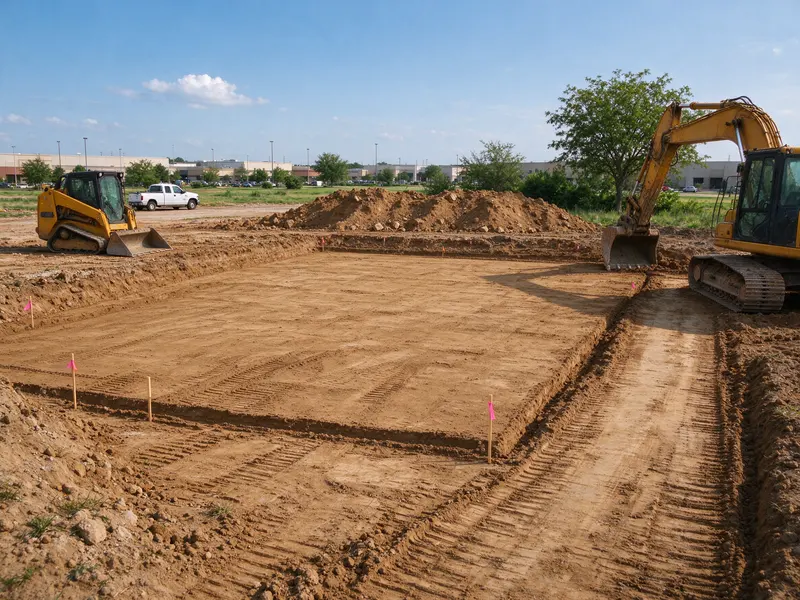
Resolve permits, controls and checks before release
The project needs a named party responsible for permits and required approvals. Frisco's grading submission guidance separates dirt work from utility and paving work. That distinction is useful when packaging a bid: approval for one phase should not be treated as a substitute for the requirements of another. Our Frisco excavation permit guide helps organize the questions for the applicable authority without assuming every commercial address follows the same route.
We also identify who supplies layout and reference elevations, who coordinates testing and who accepts the completed stage. Soil reports and grading plans should inform those decisions rather than sit in a separate file nobody uses in the field. Where erosion and stormwater controls are specified, their installation, maintenance and removal need assigned responsibilities. A line saying that controls are by others is only useful when the other party and timing are understood.
Organize phase releases and shared responsibilities
On a phased project, identify the specific area released for earthwork rather than treating the entire property as available. An entrance may be complete while a receiving area is still occupied by another contractor. A material delivery may be scheduled before the work zone can accept it. We review those relationships with the general contractor so the earthwork sequence reflects the actual site releases. A date alone does not tell us whether the access, work area and required information will all be ready.
For shared operations, name the party controlling each interface. That includes the entrance, survey references, material stockpiles and any area that will be handed from one contractor to another. Decide how an area is released and how an unresolved item is recorded. If a later trade disturbs an accepted surface, responsibility for returning it to the required condition should be addressed in the construction arrangements. This keeps ordinary sequencing discussions separate from a disagreement about whether the excavation package was completed.
Manage revisions and handoffs without losing the scope
Unexpected ground conditions and revised drawings should have a clear decision path. Identify who can authorize an additional cut, changed material treatment or extra export. The written record should connect the instruction to the affected area and quantity basis. Our buried obstacles guide explains why an excavation allowance needs a process for changed conditions rather than an assumption that every buried object is ordinary soil.
The handoff should describe the actual completed stage: excavation limits, relevant elevations, material movements and outstanding items that another trade must resolve. It should also identify any inspection or test records required by the project. The excavation sequence guide helps plan those transitions. Before pricing, send the documents and proposed schedule together. We can then discuss the base package, alternates and exclusions in a format that makes comparing earthwork quotes practical for the owner and general contractor.
Questions before the work.
Can you bid from a preliminary civil set?
We can review a preliminary scope, but the estimate must identify which drawings and assumptions it uses. Revised grades, quantities or material requirements may change the price. Flag unresolved details so they can be handled as defined assumptions or alternates rather than treated as final instructions.
Who should provide the excavation quantity takeoff?
Agree on the quantity source and measurement basis during bidding. A supplied takeoff can help, but it must match the current drawings and distinguish excavation from loose haul volume or compacted fill. The proposal should explain how quantity differences will be addressed.
Does a commercial excavation proposal include utility installation?
No. We provide earthwork within an agreed scope. Pipe, conduit, connections, testing and commissioning belong to the appropriate installation contractor. Excavation and later backfill can be coordinated around that contractor when the drawing details and handoff responsibilities are established.
Can the site remain active during excavation?
That depends on the required separation, available access and construction sequence. Share occupant operations, delivery needs and areas that must remain usable. We review the excavation phase around those constraints before promising an operating arrangement or assigning equipment to the site.
How should bid alternates be described?
Tie each alternate to a specific change, such as an identified export quantity, a revised work limit or an additional mobilization. State what it replaces or adds. Broad alternate allowances without a scope can make a proposal look comparable while concealing very different work.